
Fiberglass vs Cellulose for Illinois Attics: Comfort, Settling, and Value
Decision support for homeowners in Chicago Heights, IL—with practical next steps and links to the services that solve the root problem.
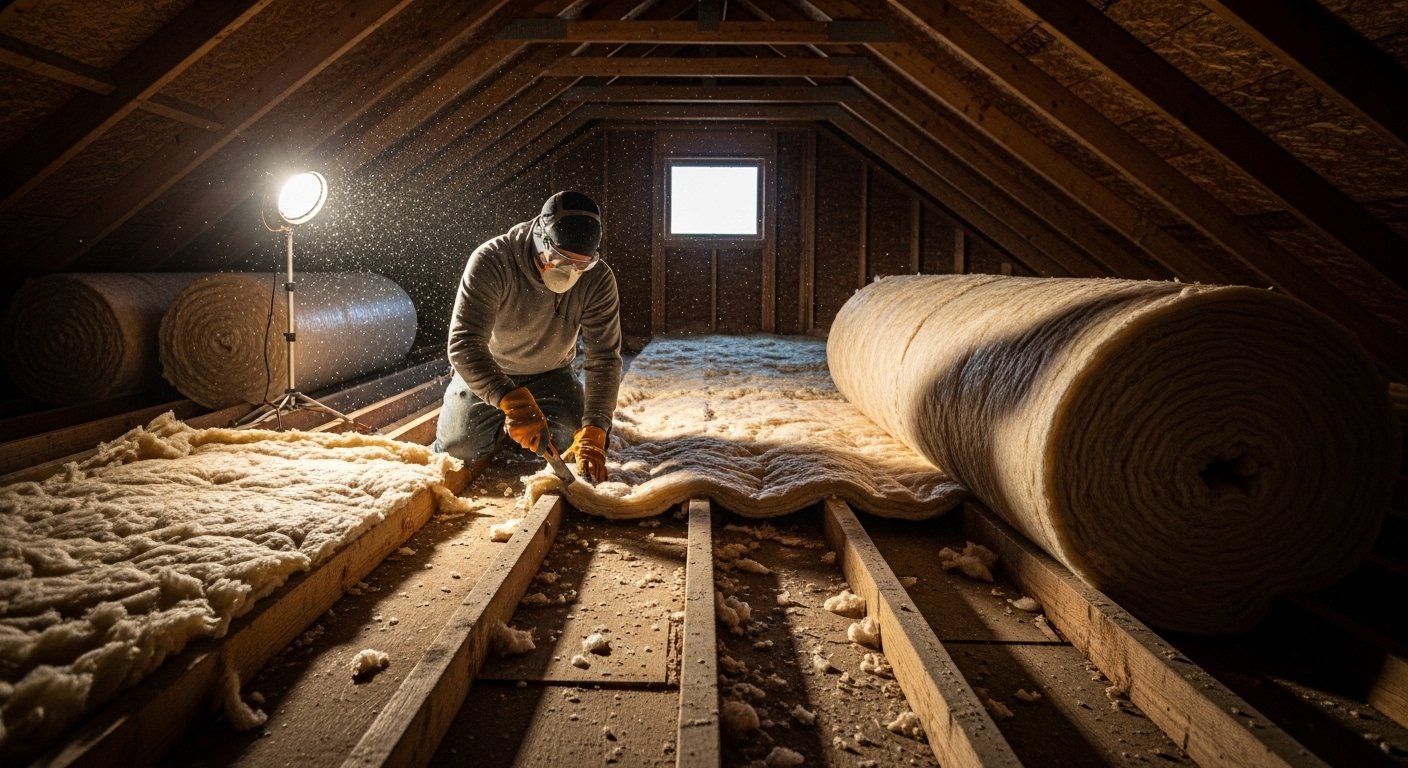
Comparisons are only helpful when they’re tied to real constraints—air leakage, moisture behavior, access, and the way older Illinois homes are built.
What matters most for comfort in winter
- Air control: drafts can overwhelm even high R-values.
- Continuity: insulation must be even and connected, especially at edges.
- Moisture behavior: basements and crawl spaces need assemblies that handle condensation risk.
When option A usually wins
Choose the “air barrier” approach when…
- Drafts and leakage are the dominant symptom.
- Space is tight and you need higher performance per inch.
- You’re dealing with complex framing or metal-building seams.
Choose the “volume” approach when…
- You can add depth easily (typical attic upgrades).
- The goal is a straightforward R-value boost.
- Air sealing is already addressed or included in scope.
What to ask before choosing
- Is moisture present now (musty smell, condensation, staining)?
- Where are the biggest air leaks (attic hatch, rim joists, chases)?
- Is the space vented, conditioned, or intended to dry to the interior?
- What’s the plan for transitions (edges, penetrations, access doors)?
Bottom line
The “best” insulation is the one that matches your assembly. If you want a recommendation quickly, text photos of the space and your main comfort complaint.
Related services
If this guide describes what you’re dealing with, these services are the most direct fix:
More helpful reads
- Closed Cell vs Open Cell Spray Foam in Chicago Heights: Which One Fits Your Build?
- Best Attic Insulation for Cold Illinois Winters: R-Value, Air Leaks, and Ice Dams
FAQs
Which option is best for comfort?
The best option is the one that solves your home’s main problem—air leakage, insufficient R-value, or moisture behavior. Comfort usually improves fastest when air sealing is addressed.
Is higher R-value always better?
Only if the insulation is continuous and air leaks are controlled. Gaps and bypasses can cancel out impressive R-values.
Will one option reduce ice dams more?
Ice dams are more about attic heat and bypasses than the label on the insulation. Sealing and consistent coverage matter most.
Can I mix insulation types?
Yes. Hybrid systems are common when different areas of the home have different constraints and moisture needs.
Do older homes need a different approach?
Often yes. Older homes may have more bypasses and unusual cavities that require a careful plan.