
Basement Insulation in Chicago Heights, IL
Reduce basement heat loss and improve comfort with rigid foam, spray foam, or hybrid solutions tailored to concrete walls and Illinois moisture realities.
Common searches: basement wall insulation illinois, rigid foam basement insulation, unfinished basement insulation installation
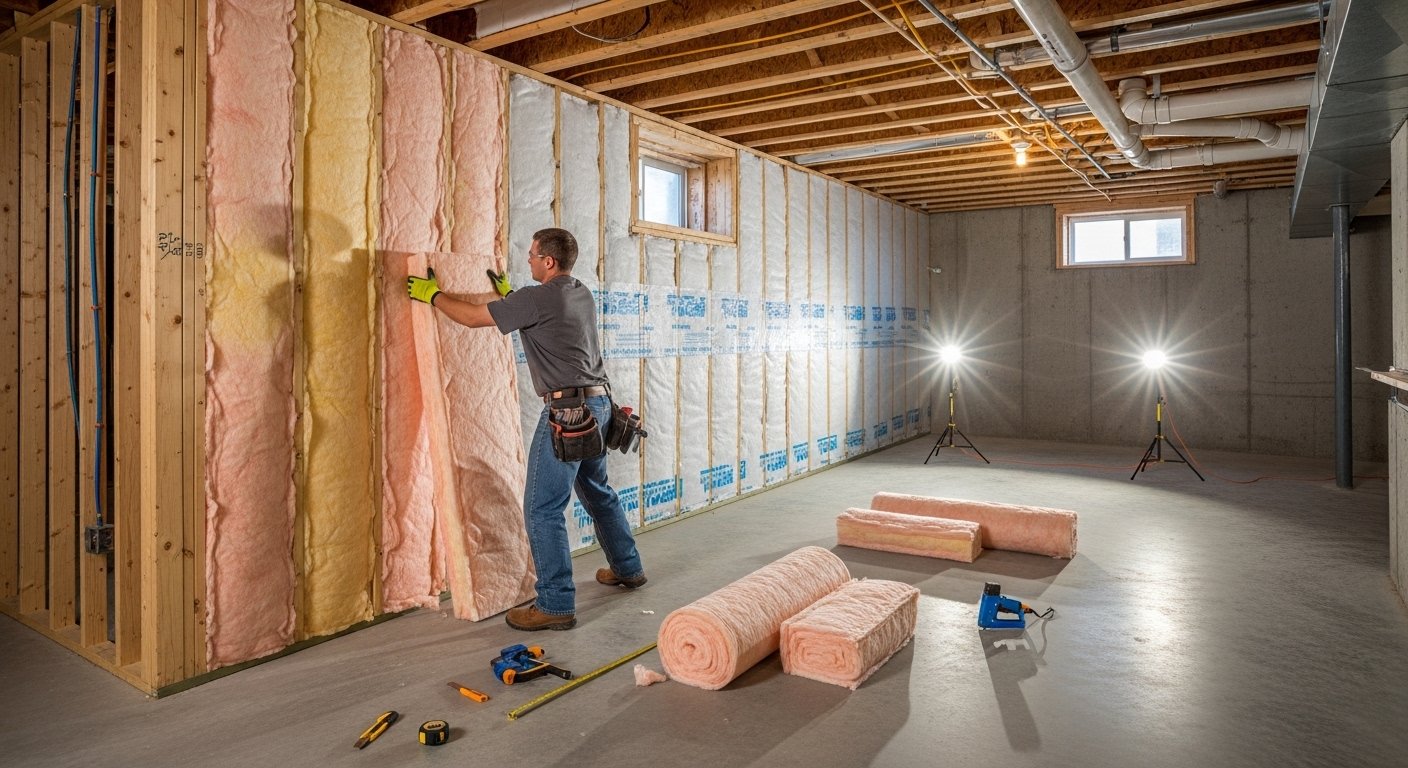
Quick self-check: signs this service fits
- Basement walls feel cold to the touch
- First floor floors are chilly above the basement
- You see condensation on concrete in winter
- Finished basement feels damp or smells musty
- HVAC runs more than expected in cold weather
- Drafts around rim joists or utility penetrations
- You want to finish the basement and need the right assembly
If you recognize two or more of these, it’s usually worth inspecting the space and building a plan before winter hits hard.
What we do
We don’t treat insulation like a commodity. We look for the reasons performance fails—air leakage, moisture, missing continuity—and then install a system that matches the assembly.
- Evaluate: insulation depth, gaps, moisture, ventilation, and problem areas.
- Seal: address the big bypasses so heat and moisture aren’t moving where they shouldn’t.
- Install: apply the right material to the right location at the right thickness.
- Verify: confirm coverage and give you clear expectations on outcomes and next steps.
Our process
- Assess basement moisture and wall conditions
- Air seal and insulate rim joists where needed
- Install insulation system appropriate for concrete (foam board/foam)
- Detail seams, transitions, and penetrations
- Clean finish and verification for comfort and continuity
We’ll tell you what’s essential, what’s optional, and where the real return comes from.
Pricing factors
Exact pricing depends on your home, but these are the levers that typically move the quote:
- Finished vs unfinished basement approach
- Moisture condition of walls and need for mitigation
- Material choice (rigid foam vs spray foam vs hybrid)
- Rim joist air sealing and insulation scope
- Obstructions (utilities, framing, storage areas)
- Fire/thermal barrier requirements for the chosen method
For budgeting, see the related guides below.
Why homeowners choose this upgrade
- More consistent temperatures room-to-room.
- Less draftiness during windy cold fronts.
- Reduced heat loss through weak points (attics, rim joists, basements).
- Better moisture behavior when the assembly is designed correctly.
We keep recommendations practical—focused on what changes comfort, not what inflates scope.
Related services
If we find adjacent issues during inspection, these are the most common add-on services:
Service area coverage
We provide basement insulation across Chicago Heights, IL, Olympia Fields, IL, Glenwood, IL, South Chicago Heights, IL, Flossmoor, IL, Park Forest, IL, Steger, IL. If you’re nearby, start here:
FAQs
What’s the best way to insulate concrete basement walls?
Foam-based approaches are common because they handle concrete temperature swings well. The right method depends on moisture levels and how the basement is used.
Can basement insulation cause moisture problems?
It can if the assembly traps moisture. We design the wall system so it performs well in Illinois conditions.
Should I insulate the basement ceiling instead?
Sometimes, but wall insulation usually performs better when you want a warmer basement and improved overall home comfort.
How long does basement insulation take?
Many projects are completed in 1–3 days depending on size, prep, and whether rim joists need attention.
Do you work on finished basements?
Yes. We plan around existing finishes and focus on the areas that provide the biggest performance improvement.
Will basement insulation help with energy bills?
It often reduces heat loss and improves comfort. Savings depend on your current insulation and air leakage.
Do I need an energy audit first?
Not required, but it can be helpful if you want a whole-home plan. We can also assess the basement and adjacent areas directly.
Is rigid foam safer than fiberglass in basements?
Fiberglass can struggle if moisture is present. Foam systems are often more durable in basement environments.
Ready to move forward?
Call to schedule or text photos for a faster recommendation.