
Spray Foam Insulation in Chicago Heights, IL
Open-cell and closed-cell spray foam for attics, crawl spaces, garages, and metal buildings—ideal when air control and durability matter.
Common searches: closed cell spray foam chicago heights, open cell spray foam insulation near me, spray foam contractors chicago heights
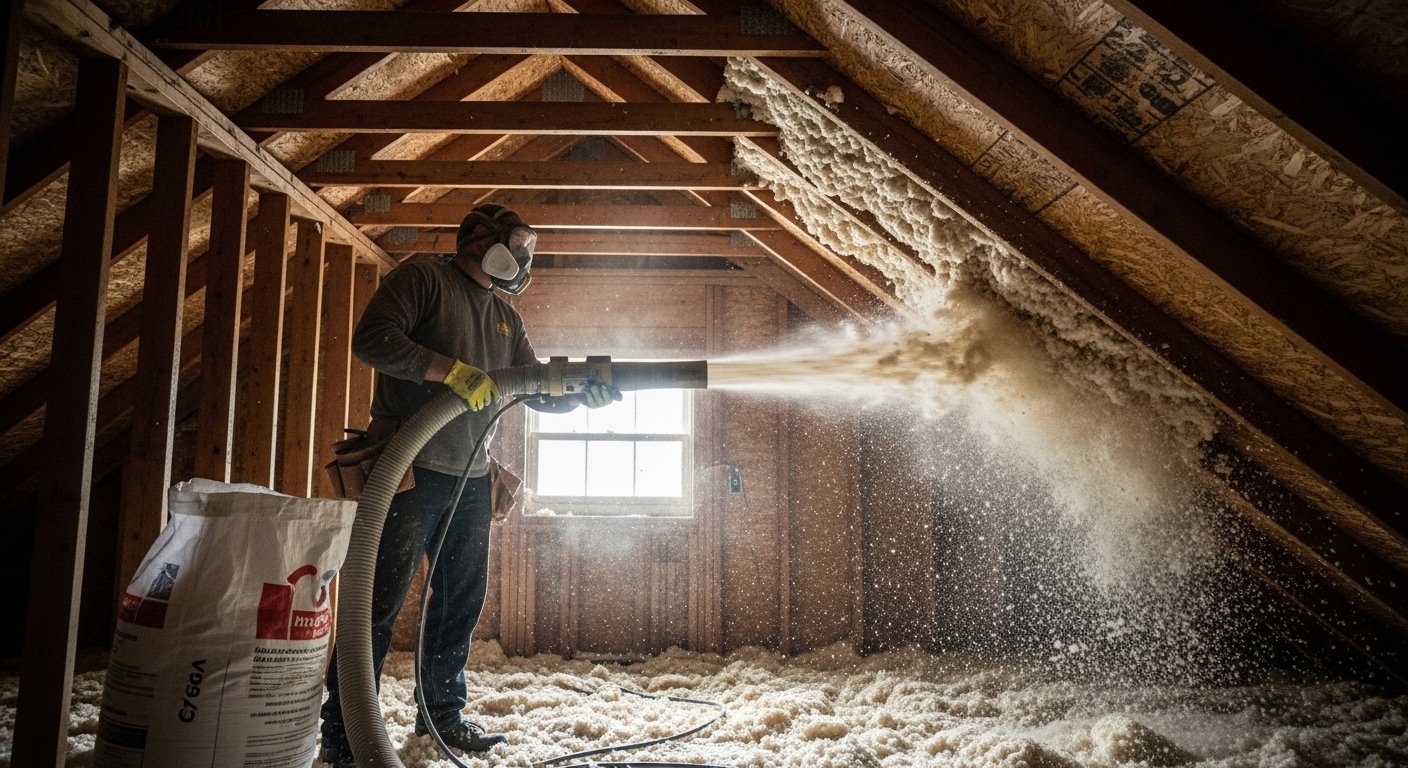
Quick self-check: signs this service fits
- Rooms feel drafty even when the thermostat is steady
- You have hot/cold spots near rim joists or bonus rooms
- Garage or workshop is unusable in winter
- Metal building sweats or feels damp
- You see air movement at penetrations and seams
- You need a thin-profile insulation solution
- Pests and dust seem to enter through gaps
If you recognize two or more of these, it’s usually worth inspecting the space and building a plan before winter hits hard.
What we do
We don’t treat insulation like a commodity. We look for the reasons performance fails—air leakage, moisture, missing continuity—and then install a system that matches the assembly.
- Evaluate: insulation depth, gaps, moisture, ventilation, and problem areas.
- Seal: address the big bypasses so heat and moisture aren’t moving where they shouldn’t.
- Install: apply the right material to the right location at the right thickness.
- Verify: confirm coverage and give you clear expectations on outcomes and next steps.
Our process
- Site evaluation and product selection (open vs closed cell)
- Masking, containment, and ventilation setup
- Prep surfaces for adhesion and dry conditions
- Spray in controlled lifts to the planned thickness
- Trim/clean edges as needed and verify coverage
We’ll tell you what’s essential, what’s optional, and where the real return comes from.
Pricing factors
Exact pricing depends on your home, but these are the levers that typically move the quote:
- Open-cell vs closed-cell selection
- Thickness required and coverage area
- Surface prep and access (rim joists, slopes, cavities)
- Fire/thermal barrier requirements for the application
- Ventilation and jobsite containment
- Complex framing or multiple levels
For budgeting, see the related guides below.
Why homeowners choose this upgrade
- More consistent temperatures room-to-room.
- Less draftiness during windy cold fronts.
- Reduced heat loss through weak points (attics, rim joists, basements).
- Better moisture behavior when the assembly is designed correctly.
We keep recommendations practical—focused on what changes comfort, not what inflates scope.
Related services
If we find adjacent issues during inspection, these are the most common add-on services:
Service area coverage
We provide spray foam insulation across Chicago Heights, IL, Olympia Fields, IL, Glenwood, IL, South Chicago Heights, IL, Flossmoor, IL, Park Forest, IL, Steger, IL. If you’re nearby, start here:
FAQs
What’s the difference between open-cell and closed-cell spray foam?
Closed-cell is denser and adds more R-value per inch and moisture resistance. Open-cell is lighter and often used where drying potential is desired. We’ll recommend based on location and goals.
Is spray foam good for Illinois winters?
Yes—especially where air leakage is the bigger issue. Foam can reduce drafts and help stabilize indoor temperatures when installed correctly.
Can you spray foam a garage or pole barn?
Yes. Garages, workshops, and metal buildings are common applications when comfort and condensation control are priorities.
How long does spray foam take to cure?
It cures quickly, but ventilation time varies. We’ll give you a clear re-entry plan based on the product and the space.
Does spray foam stop moisture?
Closed-cell resists moisture movement better than open-cell. The right approach depends on where the moisture is coming from and how the space should dry.
Will I still need air sealing if I choose foam?
Foam itself can act as an air barrier when applied at the right thickness, but transitions and details still matter.
Is spray foam more expensive than blown-in insulation?
Often, yes upfront. It can be a strong value when it solves air leakage and space constraints that other materials can’t.
Can spray foam be added over existing insulation?
Sometimes. In many retrofit scenarios we address the air and moisture issues first, then choose the safest method for the assembly.
Ready to move forward?
Call to schedule or text photos for a faster recommendation.